

Recycled Plastic vs GRP Decking: Which Is Better for Bridges and Boardwalks?
July 9, 2026
Recycled Plastic vs GRP Decking: Which Is Better for Bridges and Boardwalks?
Recycled plastic and GRP are both used for outdoor decking, walkways and access structures, but they are very different materials.
GRP, or Glass Reinforced Plastic, is a composite made from resin and glass fibre. Recycled plastic decking is made from processed plastic waste formed into solid boards or components.
At Built by Bison, we use Re-Life 100% recycled plastic rather than GRP for bridge decking and boardwalks because it offers the best fit for the environments we work in: wet, exposed, high-footfall outdoor locations where durability, repairability, maintenance and end-of-life impact all matter.
What is recycled plastic decking?
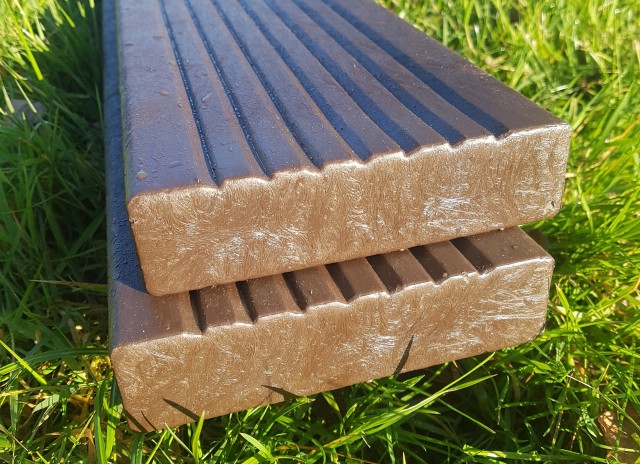
Recycled plastic decking is manufactured from waste plastic and formed into boards or structural components.
It is commonly used for:
- bridge decking
- boardwalks
- viewing platforms
- outdoor walkways
- wetland and countryside access routes
Its main advantage is straightforward: it is a durable material made from waste that can be used again at the end of its service life.
It does not rot, absorb water like timber, need preservative treatment, or require regular staining or painting.
What is GRP decking?
GRP stands for Glass Reinforced Plastic. It is also known as fibreglass or fibre reinforced plastic.
It is made by combining plastic resin with glass fibre reinforcement. This creates a composite material used for industrial flooring, platforms, grating, stair treads and access walkways.
GRP has useful applications, especially in industrial settings. However, for outdoor bridges and boardwalks where sustainability and repairability are important, it has some clear limitations.
The key difference: single-material simplicity vs composite complexity
The biggest difference between recycled plastic and GRP is how the materials are made.
Recycled plastic decking is a simpler plastic material made from waste plastic. It can be cut, handled, replaced and recycled more practically.
GRP is a composite. The resin and glass fibres are bonded together, which makes the material more difficult to recycle, repair and process at end of life.
That difference affects much more than sustainability. It affects maintenance, repair, disposal and whole-life value.
Recyclability and end-of-life impact
Recycled plastic decking is made from waste plastic and can be recycled again into new plastic products at the end of its service life.
GRP recycling is possible through specialist processes, but it is difficult in practice. Because the resin and glass fibre are bonded together, GRP cannot simply be melted down and reused like many plastic products.
This means GRP often has a more limited end-of-life route than recycled plastic. For projects in public access, conservation and environmentally sensitive settings, that matters.
Durability in wet outdoor environments
Both materials can be durable, but they behave differently when damaged or exposed to long-term outdoor conditions.
Recycled plastic is water-resistant, rot-proof and well suited to wet, shaded and exposed locations. It is a solid material, so damage is usually easier to assess and deal with.
GRP is also durable, but it can crack, chip or splinter if damaged. If the surface is cut, broken or worn, exposed fibres or damaged edges can be difficult to repair neatly.
For boardwalks and bridge decks, where public use and long-term exposure are expected, straightforward durability is important.
Repair and maintenance
Recycled plastic decking is generally simple to maintain. It does not need painting, staining or preservative treatment. If a board is damaged, it can usually be removed and replaced using standard site methods.
GRP is also low maintenance in normal use, but repairs can be less straightforward. Cracked or damaged GRP may need specialist attention, and cut edges or broken areas can expose fibres.
For remote paths, wetlands, nature reserves and access routes where maintenance visits are inconvenient, practical repairability is a real advantage.
Slip resistance
GRP decking often uses a gritted or textured surface to provide grip. This can perform well, but the surface is still something that needs monitoring over time, especially in high-use areas.
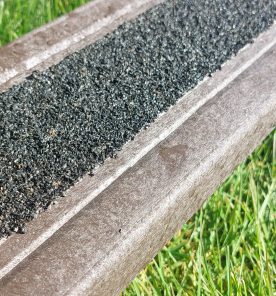
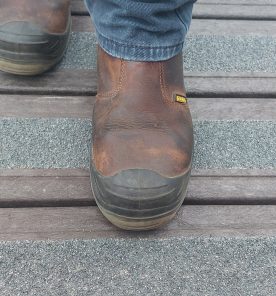
Recycled plastic decking can be supplied with textured profiles. Where stronger wet slip resistance is required, Built by Bison uses GripMaxx anti-slip recycled plastic decking, which has been independently tested to achieve a wet slip resistance rating of 94 PTV.
For bridges and boardwalks exposed to rain, mud, shade and leaf litter, slip resistance should be part of the material choice from the start.
Appearance
GRP often has a more industrial appearance, which is suitable for many factory, plant-room and service-access settings.
Recycled plastic decking has a more natural and understated finish, making it better suited to countryside access routes, nature reserves, country parks, wetlands and visitor environments.
Appearance is not the only factor, but it matters when the structure is part of a public landscape.
FAQs
Is recycled plastic better than GRP for boardwalks?
For many boardwalks, yes. Recycled plastic is made from waste material, performs well in wet outdoor environments, needs little maintenance and is easier to recycle at end of life. GRP can be useful, but it is harder to repair and recycle in practice.
Is GRP recyclable?
GRP can be recycled through specialist processes, but it is difficult in practice because the resin and glass fibre are bonded together. This gives GRP a more limited end-of-life route than recycled plastic.
Does recycled plastic decking last outdoors?
Yes. Recycled plastic decking is designed for long-term outdoor use. It does not rot, absorb water like timber, or need preservative treatment.
Is recycled plastic decking low maintenance?
Yes. Recycled plastic decking needs very little maintenance compared with materials that require painting, staining or treatment. If a board is damaged, it can usually be replaced.
Is GRP decking good for outdoor use?
GRP can be suitable outdoors, especially for industrial platforms, grating and service access areas. For public boardwalks, bridges and countryside access routes, recycled plastic often provides a better balance of appearance, sustainability, repairability and whole-life value.
What is the main difference between recycled plastic and GRP?
Recycled plastic is made from waste plastic and can be recycled again. GRP is a composite made from resin and glass fibre, which makes it harder to recycle and repair in practice.
Related Products
Explore other solutions designed to complement your project. From durable outdoor structures to practical access and safety features, our range helps you create functional, long-lasting spaces.
Start Your Project Today
Quick to install, built to last and unbeatable in performance and value. Request a quote for bridges, boardwalks or any outdoor structure.