
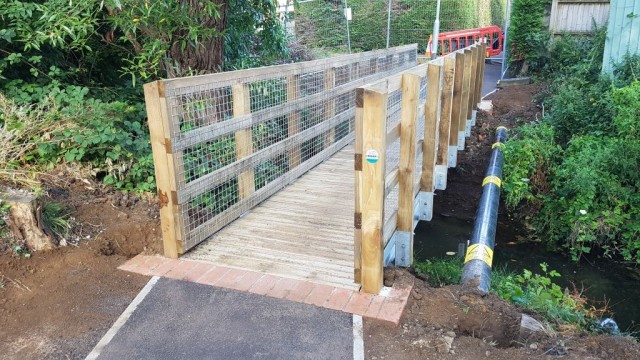
Bridging the Gap: Why Bison Bridges Are Ideal for Wheelchair Access
April 17, 2025
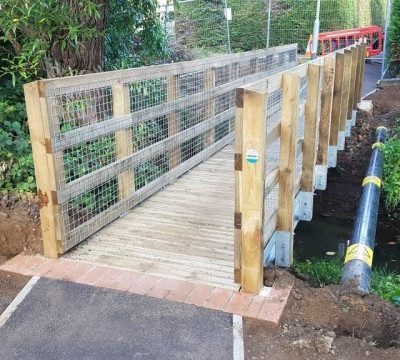
Wheelchair Accessible Bridges: Step-Free Crossings by Bison
Wheelchair accessible bridges make paths, parks and rights of way usable by everyone, including wheelchair users, people with pushchairs and those with limited mobility. At Built by Bison, we design accessible footbridges that deliver step-free access without compromising on strength, durability or appearance.
What makes a bridge wheelchair accessible?
An accessible footbridge lets users cross without steps, steep slopes or obstacles. The key features are:
- Step-free approaches – a smooth transition from the path onto the bridge deck, with no lip or step at either end.
- Suitable gradients – gentle slopes or ramps that wheelchair users can manage independently.
- Adequate width – enough clear width for a wheelchair, and ideally room for users to pass.
- Slip-resistant decking – a firm, even surface that stays grippy in wet conditions.
- Edge protection and handrails – raised edging (kerbs) to stop wheels running off the edge, and continuous handrails for support.
Two ways to achieve step-free bridge access
1. Accessible bridge ramps
Where the bridge deck sits above the surrounding path, ramps at each end provide a gradual approach. Ramps are designed with appropriate gradients, landings and handrails so that wheelchair users can use them comfortably and safely.
2. Level access through raised groundworks
In rural and natural settings, ramps are not always the best fit. Instead, the approach paths can be built up with raised groundworks so the path meets the bridge deck at the same level. This creates a seamless, level crossing that blends into the landscape and avoids the need for long ramp structures.
Your choice of abutment also affects the final deck level. Read more about cast concrete bridge abutments, gabion bridge abutments and ground screw bridge foundations.
Durable materials for long-lasting accessibility
An accessible bridge needs to stay accessible for years. Bison bridges are built from durable materials, including galvanised steel, with anti-slip deck surfaces, raised edging and continuous handrails included where required. The result is a low-maintenance crossing that stays safe and usable through every season.
Where wheelchair accessible bridges are used
- Public rights of way, footpaths and bridleways
- Country parks, nature reserves and woodland trails
- Canal and riverside paths
- School grounds, campuses and community spaces
- Private estates and visitor attractions
Supporting your accessibility obligations
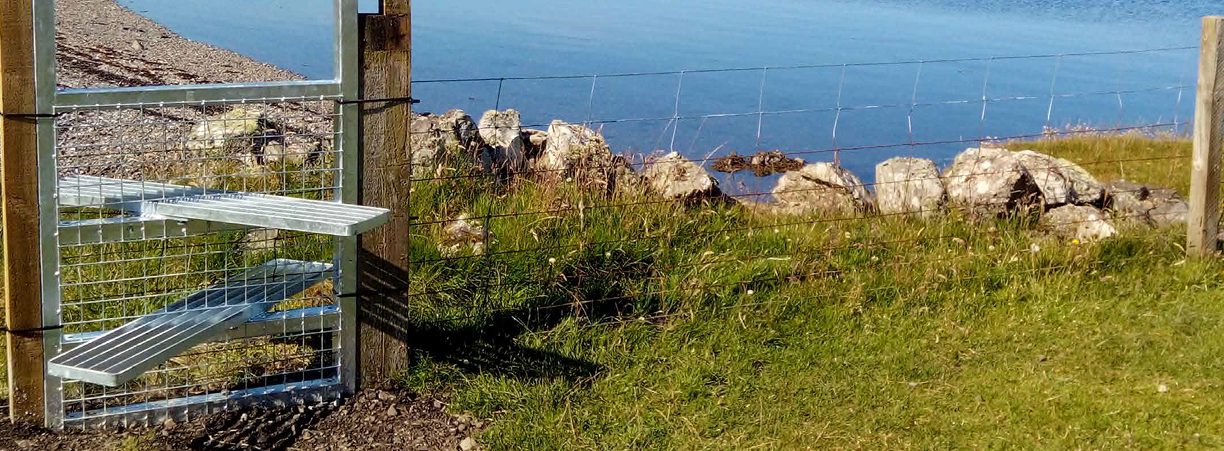
Councils, landowners and public bodies have duties under the Equality Act 2010 to remove barriers for disabled people. Replacing stepped crossings, stiles and narrow footbridges with wheelchair accessible bridges is a practical way to open up routes for everyone. Pair your bridge with our Right of Way products, such as accessible gates, for a fully barrier-free route.
Work with us on your next accessible bridge
Whether you are a council, contractor, community group or private landowner, our team can help you specify the right accessible footbridge for your site. Explore our Bridges & Boardwalks range, see our case studies, download technical details from the Specification Hub or contact us on 01530 242 405.
Start Your Project Today
Quick to install, built to last and unbeatable in performance and value. Request a quote for bridges, boardwalks or any outdoor structure.