
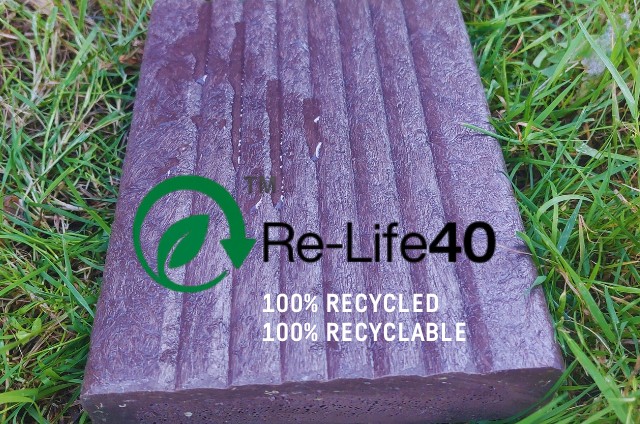
Re-life Recycled Plastic
September 25, 2025
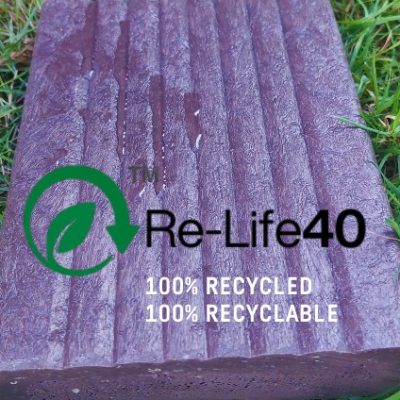
Re-Life Recycled Plastic for Bridges and Boardwalks
Re-Life is Bison’s solid recycled plastic system for bridge decks, parapets, boardwalks and viewing platforms. It won’t rot, needs no maintenance and can be fully recycled at the end of its life, making it a durable, low-impact choice for councils, rights of way teams and landscape architects.
There are two grades of Re-Life deck board: Re-Life40 for pedestrian and cycle bridges, and Re-Life60 for bridleway bridges.
What is Re-Life recycled plastic?
Re-Life is made mainly from HDPE (high-density polyethylene) with some LDPE (low-density polyethylene). It contains no PVC. Because it’s a single family of plastics rather than a blend of materials, it’s inert, stable outdoors and can be recycled again when it’s no longer needed.
The same material can be used across a whole structure – deck boards, posts, rails and handrails – so a bridge or boardwalk can be finished in one consistent, rot-free material.
Re-Life40 vs Re-Life60: which grade do you need?
Re-Life40 suits footpaths, cycle routes, boardwalks and viewing platforms where the deck must carry crowds of people and bikes.
Re-Life60 is the heavier-duty board for equestrian crossings, where the deck has to resist the concentrated load of a horse’s hoof. Read more in is recycled plastic suitable for a bridleway bridge?
On Bison bridges, Re-Life boards sit on hot dip galvanised steel beams, which carry the load across the span.
Key benefits of Re-Life deck boards
- Slip resistant – a textured surface for grip underfoot. For steep or shaded sites, see GripMaxx anti-slip decking.
- No maintenance – no sanding, staining or preservative treatment.
- Weather resistant – won’t rot, split or absorb water, even over water and boggy ground.
- Insect resistant – nothing for insects or fungi to break down.
- Fully recyclable – can be recycled again at end of life instead of going to landfill.
Why Re-Life is better for the environment
Re-Life is inert, so it won’t leach chemicals into the ground or water. That makes it a good fit for wetlands, nature reserves and other sensitive sites where treated timber can be a concern.
It also puts waste plastic to use. Around 1,500 plastic bottles are diverted from landfill for every 1.5m boardwalk section, and using recycled plastic instead of timber reduces demand on forests. For a wider look at sustainable options, read our guide to eco-friendly bridge materials.
Where to use Re-Life
- Footbridge decks and parapets
- Bridleway bridges (Re-Life60)
- Boardwalks over wetland and soft ground
- Viewing platforms
- Nature trails and public rights of way
Comparing materials? See is recycled plastic good for bridges? and timber vs recycled plastic boardwalks and whole-life cost.
Re-Life vs composite decking
Composite decking mixes plastic with wood fibre or other materials. Once combined, those materials can’t easily be separated, so composite boards are hard to recycle at end of life.
Re-Life is a single recycled plastic material, so it can be recycled again. It also contains no wood content to absorb moisture, swell or decay – an advantage on any crossing that stays wet for much of the year.
Specify Re-Life on your next project
Use our bridge specifier tool to plan your span, deck and abutments, browse our Bridges & Boardwalks range, or download technical details from the Specification Hub. Need advice? Call our team on 01530 242 405 or request a quote.
Start Your Project Today
Quick to install, built to last and unbeatable in performance and value. Request a quote for bridges, boardwalks or any outdoor structure.