
Why Do Timber Boardwalks and Bridges Fail Sooner Than Expected?
July 9, 2026
Why Do Timber Boardwalks and Bridges Fail Sooner Than Expected?
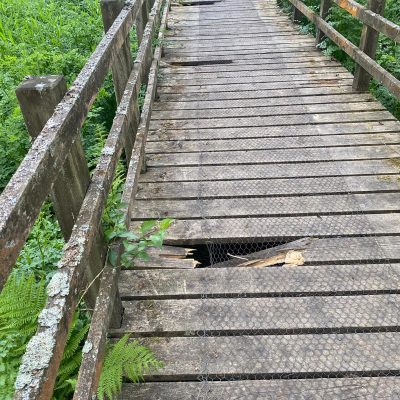
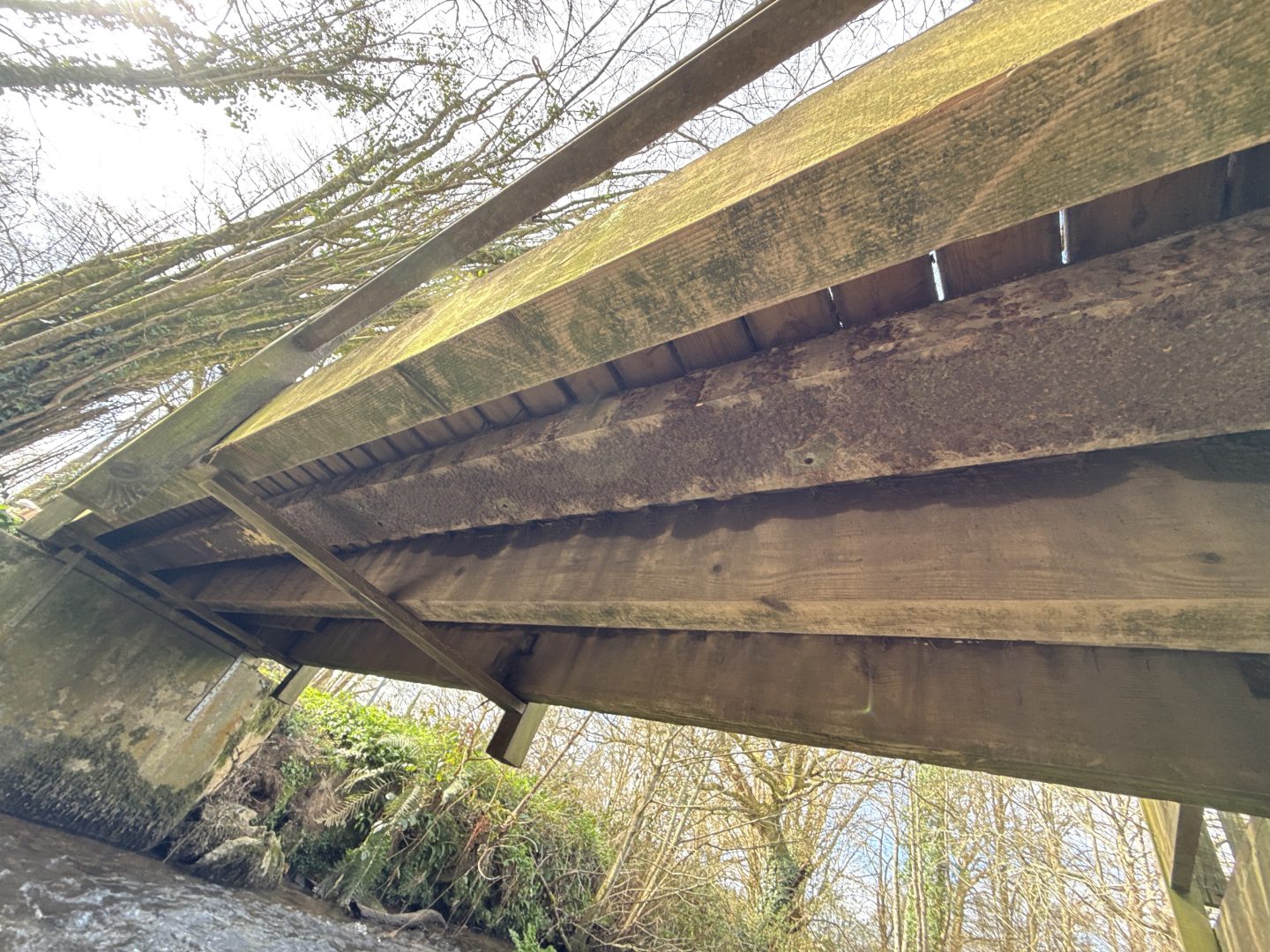
Timber boardwalks and bridges often fail early because modern timber treatments are different from older treatments, and outdoor access structures are frequently exposed to moisture, shade, leaf litter and standing water. In these conditions, timber can rot, soften or become slippery, especially where moisture is trapped beneath surface coverings.
For many years, timber was the default choice for outdoor bridges, boardwalks, viewing platforms and access structures. It was familiar, relatively easy to work with, and when properly specified and treated, it could perform well.
However, many site managers are now facing a difficult problem: timber structures that were expected to last much longer are showing signs of decay after only a few years.
At Built by Bison, we see this regularly on outdoor infrastructure projects across the UK. Bridges, boardwalks and viewing platforms that once looked serviceable can begin to soften, split, rot or become slippery, particularly in wet, shaded or high-footfall locations.
The issue is not that timber has no place. It does. But modern treated timber is different from the material many people remember, and in challenging environments it does not always deliver the lifespan that customers expect.
What changed with treated timber?
Historically, some external-grade timbers were treated with preservatives containing copper, chromium and arsenic, commonly known as CCA. These treatments were effective, but they also raised serious health and environmental concerns.
Regulations introduced in the early 2000s restricted the use of CCA-treated timber, particularly where people could come into regular contact with it. In the UK, CCA-type preservatives can no longer be used to treat timber, and arsenic/chromium wood preservatives were banned from sale from September 2006.
That was the right direction from a safety and environmental point of view.
The trade-off is that many modern timber treatments do not always provide the same long-term performance in harsh outdoor environments, especially where structures are exposed to constant moisture, leaf litter, mud, shade, standing water or repeated wetting and drying.
Why do timber boardwalks rot?
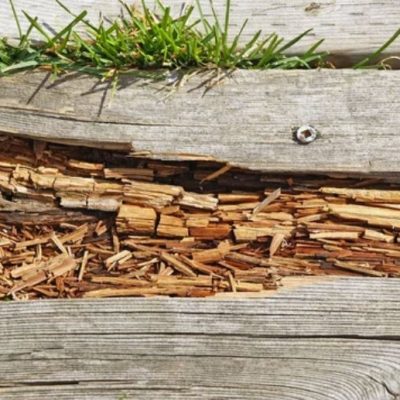
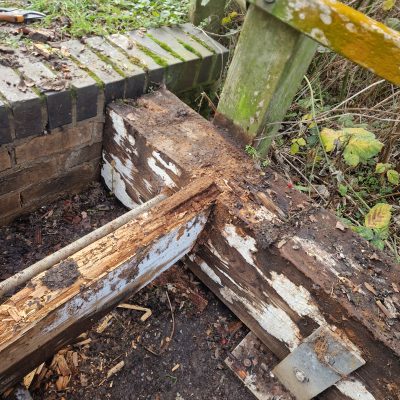
Timber boardwalks rot when moisture is allowed to remain in the structure for long periods. This is especially common around posts, joists, bearers, fixings, joints, end grains and hidden areas below the walking surface.
A boardwalk through a nature reserve, a pedestrian bridge over a stream, or a viewing platform in a wetland is rarely dry for long. Moisture can get into the timber and stay there, particularly where the structure is shaded, close to wet ground or covered by leaves and vegetation.
The top surface may still look acceptable, but the structure underneath can be weakening.
This is particularly important because timber failure is not always obvious from a routine visual inspection. A deck board may appear firm. A bridge may still look complete. A patched section may give the impression that the problem has been dealt with.
In reality, the underlying timber may still be deteriorating.
Why can timber bridges fail before they look unsafe?
Timber bridges and boardwalks can fail before the problem is obvious because much of the decay often happens in hidden areas. The most vulnerable parts of the structure are usually the areas most exposed to moisture, but least visible during everyday use.
This can include:
- the underside of deck boards
- timber posts in or close to wet ground
- joists and bearers below the walking surface
- joints where water collects
- fixing points
- areas covered by anti-slip materials or patch repairs
This is why a surface can appear safe while the structure below is becoming weaker.
For landowners, councils, wildlife sites and public access teams, that distinction matters. A bridge or boardwalk is only as safe as the structure beneath the walking surface.
Is patching an old timber bridge a practical solution?
Patching can be useful as a temporary repair, but it should not be treated as a long-term answer if the timber below is already deteriorating.
A slippery timber bridge might be covered with anti-slip strips, mesh, boards, matting or another surface layer. These products can improve short-term grip, but they do not solve the underlying issue if the timber below is decaying.
In some cases, covering the surface can make inspection more difficult. It can also trap moisture against the timber, accelerating decay in the areas that most need to dry out.
This creates a serious risk: the surface may appear safer, while the structure underneath continues to weaken.
If a timber bridge, boardwalk or viewing platform has already needed repeated repairs, it may be time to consider whether another patch is genuinely solving the problem, or simply hiding it.
What is the best alternative to timber boardwalks and bridges?
Where timber is repeatedly failing, it may be time to consider a different construction approach.
Built by Bison supplies bridge, boardwalk and viewing platform systems using recycled plastic for decking and parapets, combined with galvanised steel structural beams where strength and span are required.
This combination provides a long-life alternative to traditional timber construction.
Recycled plastic does not rot, splinter, split or absorb water in the same way as timber. It does not require preservative treatment, and it is particularly well suited to damp, shaded and exposed locations where timber can struggle.
Galvanised steel beams provide reliable structural support and are designed for long-term outdoor use. Together, recycled plastic decking, recycled plastic parapets and galvanised steel beams create a robust system for sites where durability, safety and reduced maintenance are priorities.
For many projects, this makes recycled plastic boardwalks and galvanised steel bridge structures a practical long-term option, especially in wetland, woodland, riverside and high-footfall environments.
Can a boardwalk still have a traditional timber appearance?
Yes. Not every site needs, or wants, a fully recycled plastic finish.
Built by Bison can also supply hybrid boardwalk systems, using Re-Life 100% recycled plastic for the substructure and timber for the visible deck surface.
This approach is particularly useful where the structure is in close contact with wet ground, but a more traditional appearance is required. The elements most exposed to long-term moisture, such as posts, bearers and joists, can be manufactured from recycled plastic, while the deck board surface can be supplied in Redwood timber.
For sensitive landscapes, heritage-style settings, nature reserves and countryside access routes, this can offer a practical balance: improved durability where moisture exposure is highest, with a timber appearance on the walking surface.
Where does GripMaxx anti-slip decking fit in?
For locations where slip resistance is a key concern, Built by Bison also supplies Re-Life GripMaxx anti-slip deck boards.
GripMaxx is designed for bridges, boardwalks, viewing platforms and walkways where wet surfaces can increase slip risk. It has been independently tested to achieve a wet slip resistance rating of 94 PTV, making it suitable for exposed, high-footfall and wet outdoor environments.
Used as part of a properly designed bridge or boardwalk system, GripMaxx helps address both surface safety and long-term durability.
It is particularly useful where public access needs to be maintained safely in wet, shaded or exposed locations.
Why replacement can be better than another surface repair
Replacing failing timber with a recycled plastic and galvanised steel system is not simply a cosmetic upgrade. It addresses the root of the problem.
Instead of covering old timber and hoping for the best, the structure can be replaced with materials selected for long-term outdoor use, lower maintenance and safer public access.
That is especially relevant for:
- nature reserves and wetland sites
- Rights of Way routes
- visitor attractions
- woodland paths
- country parks
- viewing platforms
- boardwalks in shaded or damp areas
- pedestrian, equestrian or cycle route bridges
A timber boardwalk replacement or timber bridge replacement should not just improve how the structure looks. It should improve the way it performs.
When should timber structures be reviewed?
Any bridge, boardwalk or viewing platform should be inspected regularly, but extra care is needed where there are signs of:
- soft or springy deck boards
- movement underfoot
- slippery surfaces
- lifting anti-slip strips
- standing water
- visible rot or fungal growth
- loose fixings
- patched areas hiding the original deck
- timber in constant contact with wet ground or vegetation
- repeated repair work in the same areas
If a structure has already needed repeated repairs, it may be time to ask whether another patch is genuinely solving the problem.
Built by Bison’s approach
Our work is focused on practical outdoor infrastructure that lasts.
We help customers replace ageing timber bridges, upgrade boardwalks, improve access routes and reduce long-term maintenance. Every site is different, so we look at the environment, span, loading, access requirements, slip risk and expected use before recommending a solution.
Sometimes that means a full replacement bridge with galvanised steel beams and recycled plastic decking. Sometimes it means a recycled plastic boardwalk. Sometimes it means a hybrid boardwalk with a recycled plastic substructure and Redwood timber deck boards. Sometimes it means GripMaxx decking where slip resistance is a key priority.
The important point is simple: the solution should deal with the structure, not just the surface.
Is it time to rethink timber?
Timber still has its place, but for wet, shaded and high-use outdoor structures, it is no longer safe to assume it will last as long as older installations once did.
If your bridge, boardwalk or viewing platform is becoming harder to maintain, inspect, repair or keep safe, it may be time to look at a longer-lasting alternative.
Built by Bison can help review existing structures, offer a second opinion and recommend practical replacement options using recycled plastic decking and parapets, galvanised steel structural beams, hybrid boardwalk designs and GripMaxx anti-slip decking.
FAQs
Why do timber boardwalks rot?
Timber boardwalks rot when moisture is trapped in the structure, particularly around posts, joists, bearers, fixings, joints and shaded areas. Wet ground, leaf litter and poor drying conditions can speed up decay.
How long should a timber boardwalk last?
The lifespan of a timber boardwalk depends on the timber species, treatment, design, drainage, exposure and maintenance. In demanding wet or shaded environments, some timber structures can show significant deterioration much sooner than expected, typically around 5 – 7 years from installation.
What is the best alternative to a timber boardwalk?
For wet or exposed locations, recycled plastic boardwalks are often a strong alternative because they do not rot, split or absorb water like timber. Galvanised steel beams can also be used where structural strength is required, particularly for bridges and viewing platforms.
Can a boardwalk still look traditional without using timber for the whole structure?
Yes. A hybrid boardwalk can use recycled plastic for the substructure, where moisture exposure is highest, with Redwood timber deck boards on the visible walking surface. This gives improved durability below while keeping a traditional appearance above.
Is covering an old timber bridge with anti-slip material a solution?
Anti-slip coverings can improve short-term grip, but they do not solve decay in the timber beneath. They may also make inspection harder or trap moisture, which can worsen the underlying problem.
What is Re-Life GripMaxx decking?
GripMaxx is Built by Bison’s Re-Life anti-slip deck board for bridges, boardwalks, viewing platforms and walkways. It is designed for wet outdoor environments and has achieved a wet slip resistance rating of 94 PTV and 112 PTV when dry.
When should a timber bridge or boardwalk be replaced?
Replacement should be considered when the structure shows repeated decay, movement, soft decking, slippery surfaces, hidden damage, or when patch repairs are no longer addressing the underlying problem. A professional inspection can help determine whether repair or replacement is the safer long-term option.
Related Products
Explore other solutions designed to complement your project. From durable outdoor structures to practical access and safety features, our range helps you create functional, long-lasting spaces.
Start Your Project Today
Quick to install, built to last and unbeatable in performance and value. Request a quote for bridges, boardwalks or any outdoor structure.